Product Description
About
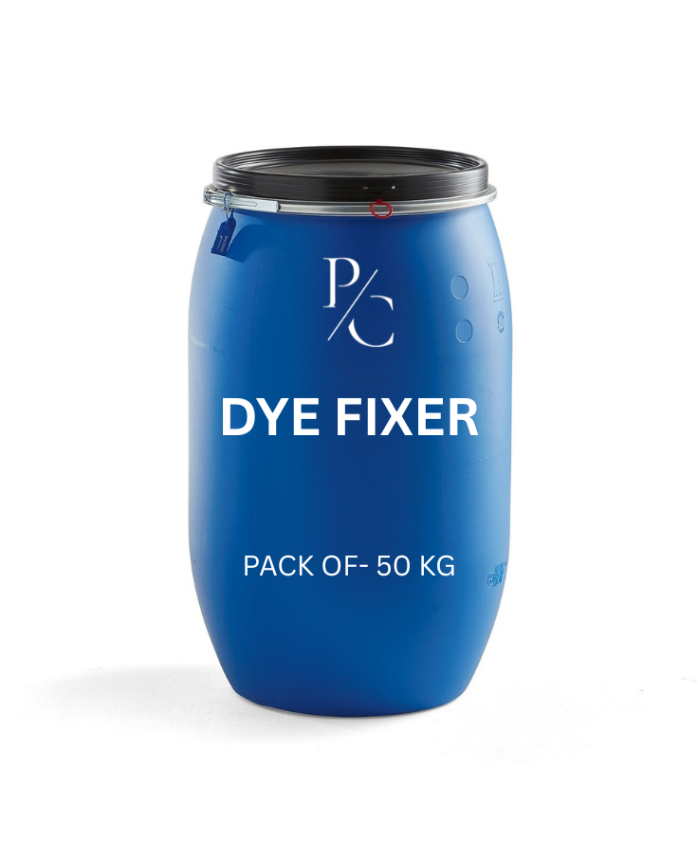
Dye Fixer (also known as Dye Fixing Agent) is a specialty chemical used in the textile industry to improve the wash-fastness of dyed fabrics. It works by "locking" the dye molecules into the fibers, preventing the color from bleeding or fading during subsequent washes.
Safety
Skin Irritation: Direct contact with the concentrated liquid can cause redness, itching, or a mild "filmy" sensation on the skin.
* Eye Irritation: Splashes can cause stinging, watering, and redness. Because fixers are designed to "coat" surfaces, they can be difficult to wash out of the eyes if not handled immediately.
* Inhalation: Inhaling the mist or vapors—especially if used in a spray application—can irritate the throat and respiratory tract.
* Sensitization: Some individuals may develop an allergic skin reaction (dermatitis) after repeated exposure to certain fixing agents.
Chemical Hazards
* Non-Flammable: Most aqueous (water-based) dye fixers are non-flammable and do not pose a fire risk.
* Reactivity: Dye fixers are often "cationic" (positively charged). They should not be mixed directly with "anionic" chemicals (like many detergents or soaps), as they will react and form a sticky precipitate (sludge) that can ruin the fabric.
* Slip Hazard: The liquid is often slightly viscous or "soapy." Spills on the warehouse floor become extremely slippery when wet.
Storage
Temperature Control: Store in a cool, dry place. Avoid freezing temperatures, as some fixers can "separate" or lose their effectiveness if they freeze and thaw. Similarly, extreme heat (above 40°C) can reduce the shelf life.
* Container Type: Store in original HDPE (Plastic) drums or carboys. Do not store in unlined metal containers, as the chemical can slowly react with the metal over long periods.
* Sealing: Keep containers tightly closed when not in use. Exposure to air can cause a "skin" or crust to form on the surface of the liquid.
* Segregation: Store away from strong oxidizing agents and anionic detergents.