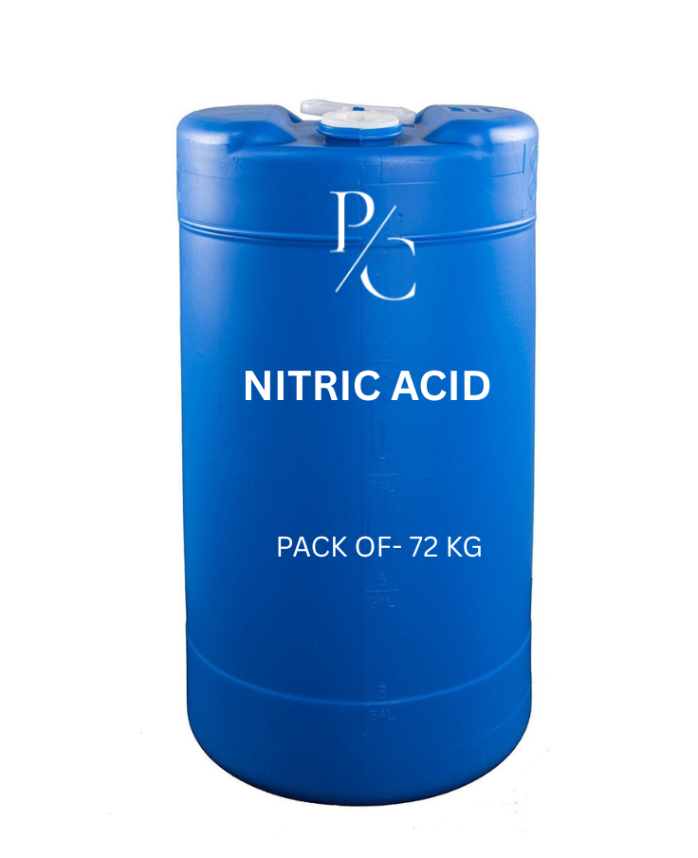
Product Description
About
* Common Concentrations:
* **Dilute (<30%): Used in light descaling, pH adjustment, and laboratory work (Lab Pro Inc, n.d.).
* Concentrated (68%–70%): The standard industrial grade (ACS Grade) used for precious metal refining and stainless steel passivation (Alliance Chemical, 2026).
* Fuming (>86%): Highly reactive; releases visible red or white fumes of nitrogen dioxide (NO_{2}). This grade requires specialized handling due to its extreme volatility (Lab Pro Inc, n.d.).
* Physical Properties:
* Color: Clear and colorless when pure. It may turn yellow or brownish over time due to the accumulation of dissolved nitrogen oxides (NO_{x}) triggered by light or heat (Alliance Chemical, 2026).
* Reactivity: It reacts exothermically with water. The "Dilution Rule" is essential: Always add acid to water slowly to disperse the generated heat (Lab Pro Inc, n.d.).
Safety
* Exposure Effects:
* Skin: Causes immediate corrosive burns and a characteristic yellow discoloration known as the xanthoprotein reaction (Lab Pro Inc, n.d.).
* Inhalation: This is uniquely dangerous because symptoms such as pulmonary edema (fluid in the lungs) can be delayed by 24 to 48 hours (CF Industries, 2024; NJ Health, n.d.).
* Eyes: A medical emergency. Splashes cause permanent damage or blindness (Seastar Chemicals, 2025).
* Personal Protective Equipment (PPE):
* Goggles & Face Shield: Standard safety glasses are insufficient; splash-proof goggles and a face shield must be worn (Lab Pro Inc, n.d.).
* Gloves: Standard nitrile gloves can be penetrated in under 5 minutes. Use thicker Neoprene or specialized acid-resistant materials like Butyl or Viton (NJ Health, n.d.; University of Notre Dame, 2013).
* Body Protection: Chemical-resistant aprons made of PVC or Neoprene over lab coats (Lab Pro Inc, n.d.).
Storage
Segregation (Critical): Do NOT store nitric acid with organic solvents (like acetone or methanol), alcohols, or reducing agents. Mixing these can result in spontaneous ignition or explosion (Alliance Chemical, 2026; Seastar Chemicals, 2025).
* Secondary Containment: Always use acid-resistant secondary containment (polyethylene trays) to prevent leaks from reaching other materials. Store containers below eye level and never on the floor (University of Notre Dame, 2013).
* Container Compatibility: Store in glass or high-density plastic. Avoid metal containers (except specific stainless steel grades for specific concentrations), as the acid will corrode the metal and release flammable hydrogen gas (Sigma-Aldrich, n.d.; Poly Processing, n.d.).
* Environment: Keep in a cool, dark, and well-ventilated area. Protect from UV light to prevent decomposition into toxic NO_{2} gas (Poly Processing, n.d.).