ACETONE, 200LTR
NOTE:- Rates are subject to fluctuation; please call to confirm.
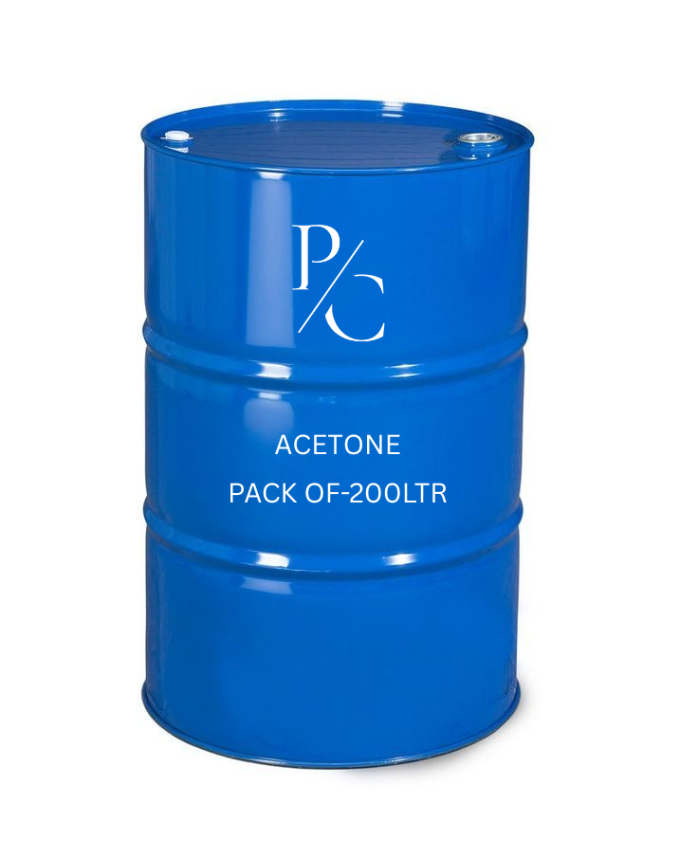
NOTE:- Rates are subject to fluctuation; please call to confirm.
Textile Industry: Used to dissolve acetate fibers and as a heavy-duty degreaser for metal parts in looms and knitting machines.* Solvent Power: It dissolves many plastics, paints, and glues, making it essential for cleaning tools and surfaces.
* Quick Drying: Because it evaporates almost instantly, it is used in processes where moisture needs to be removed rapidly.
* Extreme Flammability: Acetone is a Class 3 flammable liquid. It has a very low flashpoint, meaning it can catch fire at room temperature.* Vapor Danger: Its vapors are heavier than air. They can travel along the floor to a distant ignition source (like a spark or heater) and flash back to the container.* Static Risk: Flowing acetone can generate static electricity. Always use grounding and bonding wires when transferring liquid between metal containers.Health Hazards* Inhalation: Breathing high concentrations can cause headaches, nausea, dizziness, or drowsiness. In poorly ventilated areas, it can act as a central nervous system depressant.* Skin Contact: Acetone is a powerful solvent that removes natural oils from the skin. Frequent contact causes "defatting," leading to dry, red, and cracked skin (dermatitis).* Eye Contact: Direct contact causes severe irritation, stinging, and redness. Immediate flushing with water is required.
* Ingestion: Highly toxic if swallowed; can cause lung damage if the liquid is inhaled into the lungs while vomiting.
* Fireproof Zone: Store in a dedicated flammable-liquid storage cabinet or a cool, outdoor-ventilated warehouse. It must be kept away from all heat sources, sparks, and open flames.* Grounding (Earthing): When pouring acetone from a large metal drum into a smaller container, always use grounding cables. Static electricity from the liquid moving can create a spark that ignites the vapor.* Ventilation: Acetone vapors are heavier than air and will "sink" to the floor and travel to distant ignition sources. Floor-level ventilation is critical.
* Sealing: Keep containers tightly closed. Because it evaporates so fast, an open drum will lose a significant amount of "product weight" and profit to the air very quickly.