New!
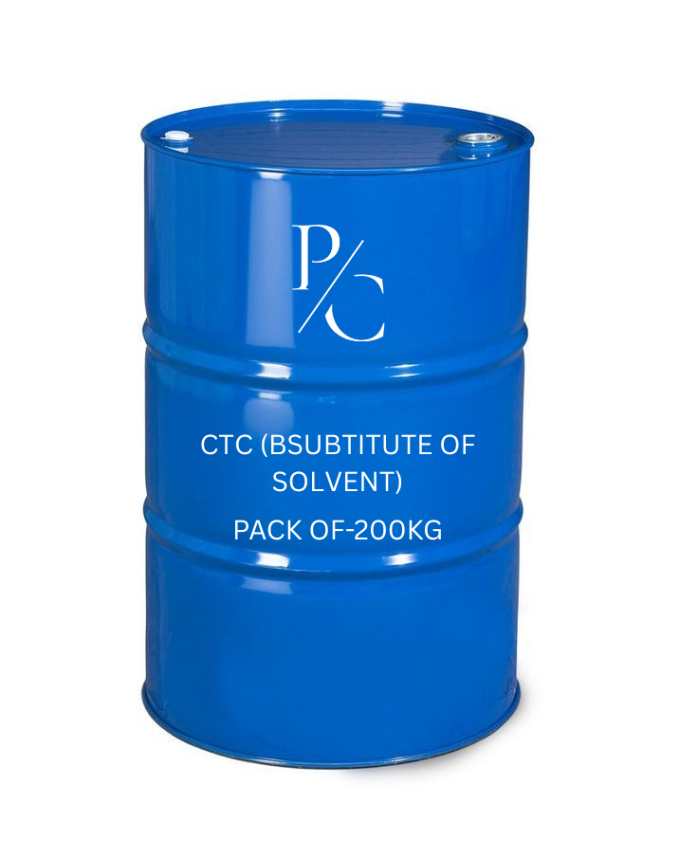
Product Description
About
In the textile and dry-cleaning industry, CTC Substitute (Carbon Tetrachloride Substitute) is a heavy-duty solvent used to replace the now-banned CTC. These substitutes are usually formulations of Perchloroethylene (PCE), Trichloroethylene (TCE), or high-grade hydrocarbon solvents. They are primarily used for industrial degreasing and removing stubborn oil and wax stains.
Safety
Inhalation (Dizziness): The vapors are very strong and act as an anesthetic. Breathing them in can cause "solvent intoxication," leading to dizziness, headaches, confusion, and nausea.
* Skin Contact: It is a powerful degreaser. It removes all natural oils from your skin instantly, causing the skin to turn white, dry out, and crack.
* Organ Toxicity: Long-term exposure to the vapors can be harmful to the liver and kidneys. Some CTC substitutes are classified as potential carcinogens.
* Eye Irritation: Splashes or high vapor concentrations cause severe stinging and redness.
Chemical Hazards
* Vapor Weight: The vapors are much heavier than air. They will sink to the floor and collect in pits or low-lying areas, creating a "choking" hazard by displacing oxygen.
* Non-Flammable (Usually): Most high-quality CTC substitutes (like PCE) are non-flammable. However, if they are heated to decomposition, they can release highly toxic Phosgene gas.
* Reaction with Metals: If moisture is present, the solvent can become acidic and slowly corrode aluminum or magnesium parts.
Storage
Ventilation (Critical): Store in a place with excellent low-level ventilation. Since the vapors sink, "floor-level" fans are more effective than ceiling fans.
* Cool & Shaded: Keep away from direct sunlight and high-heat areas (like boilers). High heat can cause the solvent to break down and become acidic.
* Container Type: Store in the original Steel Drums or high-grade HDPE containers. Ensure the seals are "Viton" or solvent-resistant; standard rubber seals will melt and leak.
* Sealing: Keep the bungs (caps) extremely tight. These solvents evaporate very quickly; an open drum is a loss of money and a health risk to your staff.
* Incompatibilities: Keep away from strong alkalis (like Caustic Soda) and reactive metals like powdered aluminum or zinc.