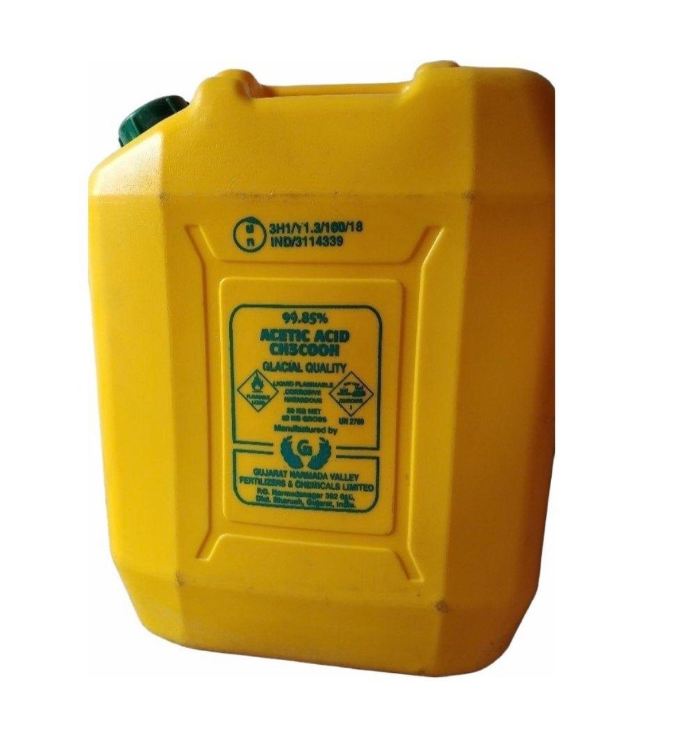
Product Description
About
Acetic acid is primarily used as a pH regulator and a neutralizing agent. Unlike mineral acids (like HCl), it is a "weak acid," making it safer for delicate fibers.
* Dyeing Process: It is used to maintain the acidity of the dye bath, which is crucial for the exhaustion of dyes onto fibers like wool, nylon, and silk.
* Neutralization: After alkaline processes like scouring or mercerization, acetic acid is used to neutralize the fabric to prevent damage and prepare it for further processing.
* Printing: It acts as a solvent for certain dyes and helps in fixing the color during the steaming process.
* Cleaning Agent: As you likely know from your business, it is also effective as a mild spotting agent for removing certain types of stains.
Safety
1. Ventilation: Store in a cool, dry, and well-ventilated area to prevent the buildup of pungent vapors.
2. Segregation: Keep away from oxidizers (like bleach/sodium hypochlorite), strong bases (caustic soda), and metals. Mixing acetic acid with bleach creates toxic chlorine gas.
3. Containment: Use original plastic (HDPE) or glass containers. Avoid metal containers (except high-grade stainless steel) because the acid will corrode them over time, leading to leaks and contamination.
4. Temperature: Keep storage temperatures above 17°C to prevent the "glacial" acid from freezing, which can expand and crack containers.
Storage
- Ideal temperature 18*C to 30*C
- Container- HDPE plastic drums or SS 316 tanks
- Ventilation- Mechanical exhaust required
- Fire safety- Class B fire extinguishers nearby